
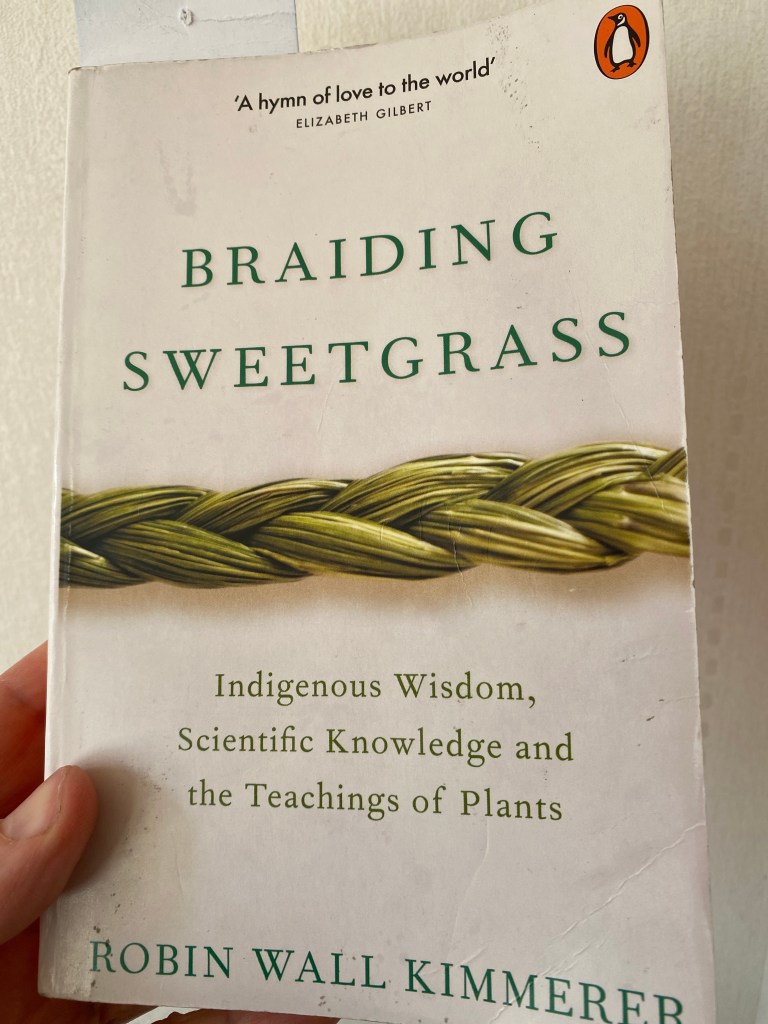
What the world needs now is a lot more wisdom. Undiluted science, vital as though it is, is too often implemented without enough humility and awareness of the context, environment and people it is being affecting. It is sadly far too easy to cast around and see what kind of mess this reductionism is putting us in. So, to be honest, I’m a bit pissed off that this book was published 10 years ago and I’m only reading it now. ‘Braiding Sweetgrass’ explains with clear focus our relationship with the plants and animals with whom we share the planet. It identifies the root problem of greed we face and how we might pick the correct fork in the road in our future attempts to get out of this hole.
Robin Wall Kimmerer tells of an indigenous story about a hungry ghost type monster called Windigo that has an insatiable hunger “The more a Windigo eats the more ravenous it becomes. It shakes with its craving, its mind a torture of unmet want. Consumed by consumption, lays waste to humankind.” Alas, there is no trouble finding the results of this endless desire for economic growth. From cleared woods and tarmacked wetlands in our own area to global wars for oil we could all get justifiably stuck in our grief for the human and planetary situation we have caused.
But this beautiful book illustrates over and over and we could move beyond this despair. Whereas now we may see land is capital, land as property or even land as machine, we can move our perception away from our flat, one-dimensional scientism and view land as healer, land as teacher and eventually land as responsibility and land as home. Robin Wall Kimmerer shows how this can be done if we have the humility to pay attention and learn from plants and to be grateful for all we receive from them and our planet. She proves this with stories and history of North American Indigenous people that alternate between being a horror and a delight to read. The loss of indigenous language and culture mirrors the ruination of ecosystems. But equally there is hope in what we could still play our part in saving. ‘Braiding Sweetgrass’ moves beyond ideas of mere sustainability to demand a philosophy of reciprocity in how we live with the land. There are too many beautiful examples to mention, but I shall always now remember how people lit fires high up on the cliffs to guide the salmon home from the ocean to the river. And I shall also have the hope, that thanks to a combination of indigenous, wisdom and scientific knowledge, this may one day happen again in the future.
 trustingmind
Leave a comment